
See whether product-market fit holds, and for whom.
PMF health by segment, revenue and retention, read-only from your own Stripe. Under the threshold it says "Not enough data".
14 days free. No card needed.
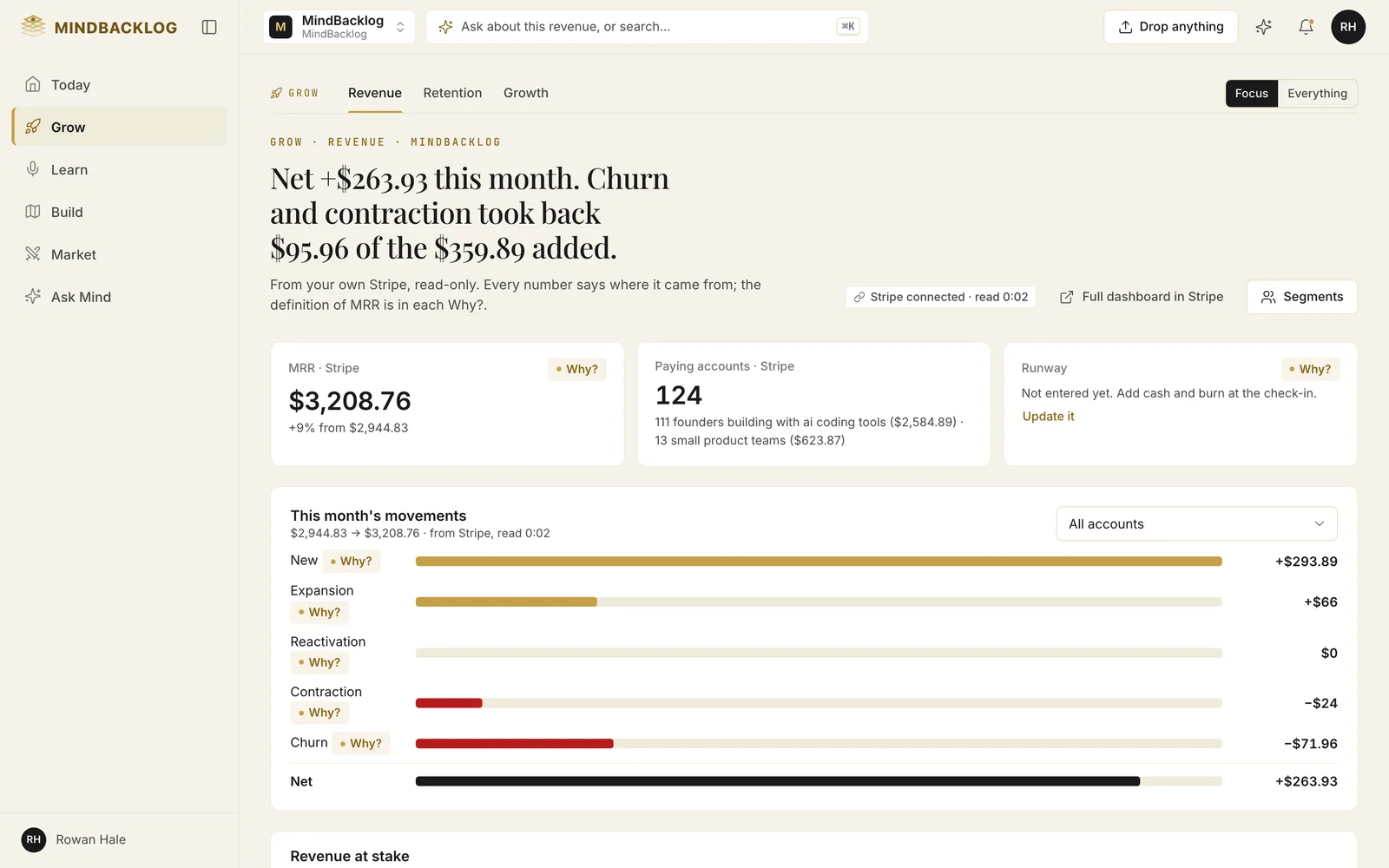
Four checks, read every morning, for each segment.
Each check shows its value, a range, n (how many answers or accounts it rests on) and where it came from.
- Still wanted
- At least 40% of people answering the PMF survey say they'd be very disappointed without the product.
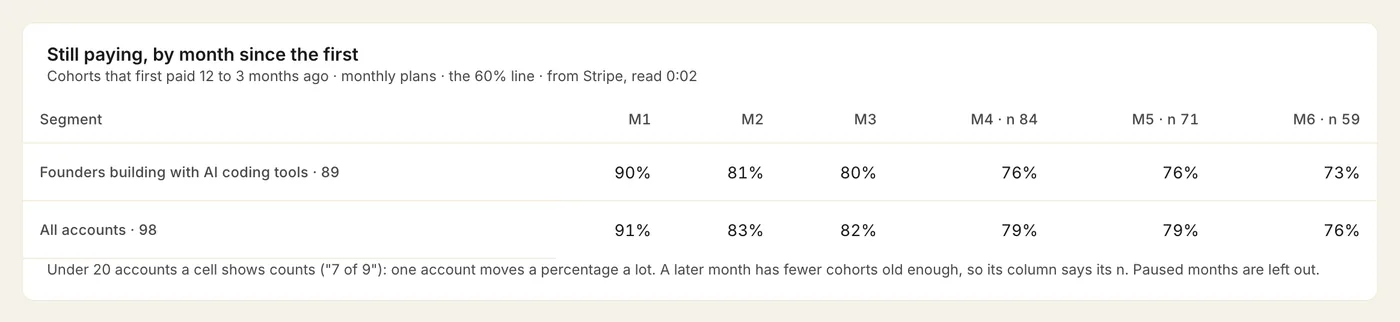
- Segments stay
- At least 60% of a segment's accounts still pay in their month 3, and it stays flat after that.
- Expansion beats churn
- This month's MRR from accounts that paid 12 months ago is at least what they paid then.
- Repeatable channel
- One channel brings at least 30% of new paying accounts, pays back on the spend you enter, and keeps 60% at month 3.
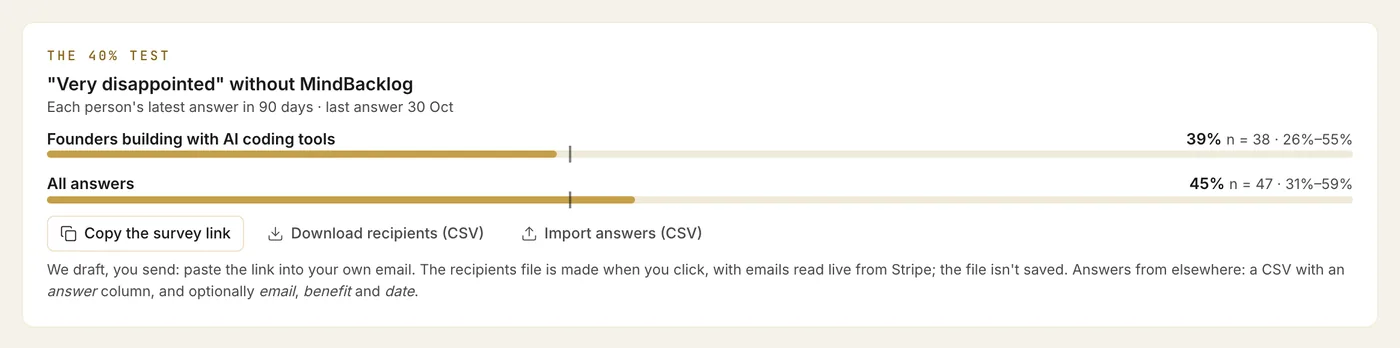
The product-market fit survey, counted with its n.
The survey asks the Sean Ellis question: how would you feel if you could no longer use the product? An optional main benefit and an optional email follow.
- Copy the survey link into your own email. We draft, you send.
- Under 10 answers: Not enough data. Under 30: a direction. From 30: decided.
- Each main benefit answer becomes feedback, filed under problems.
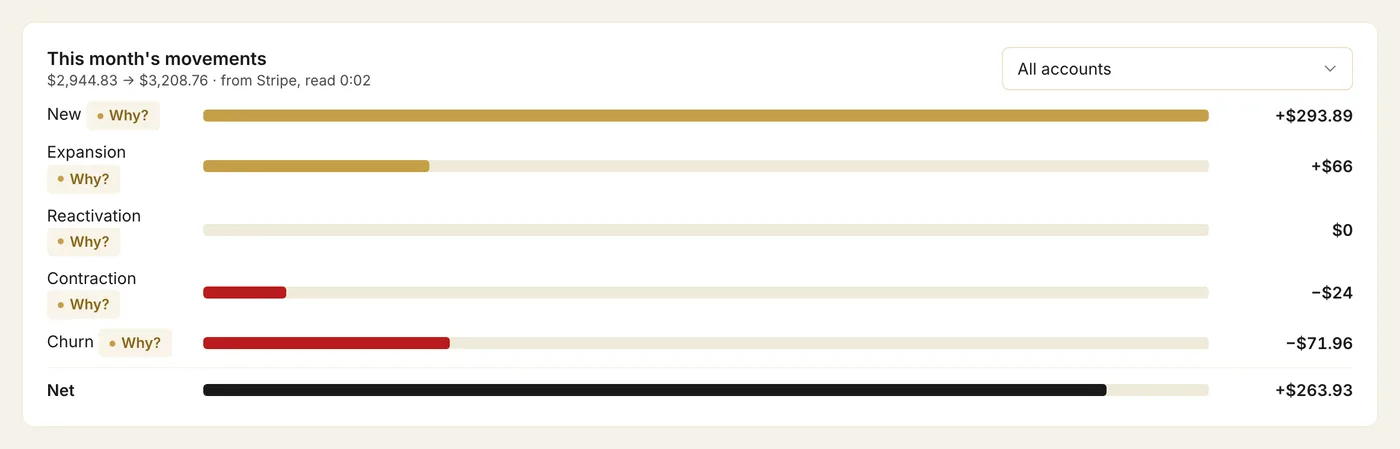
Movements, revenue at stake, and who is leaving.
MRR from Stripe, each currency on its own, with this month's movements adding up to the net change. Every number says where it came from.
- Revenue at stake ranks open problems by the MRR of accounts linked to them.
- Churn risk follows Stripe rules with no AI, such as a payment past due.
- For per-use products, Grow reads Stripe payments: revenue by month, who hasn't returned.
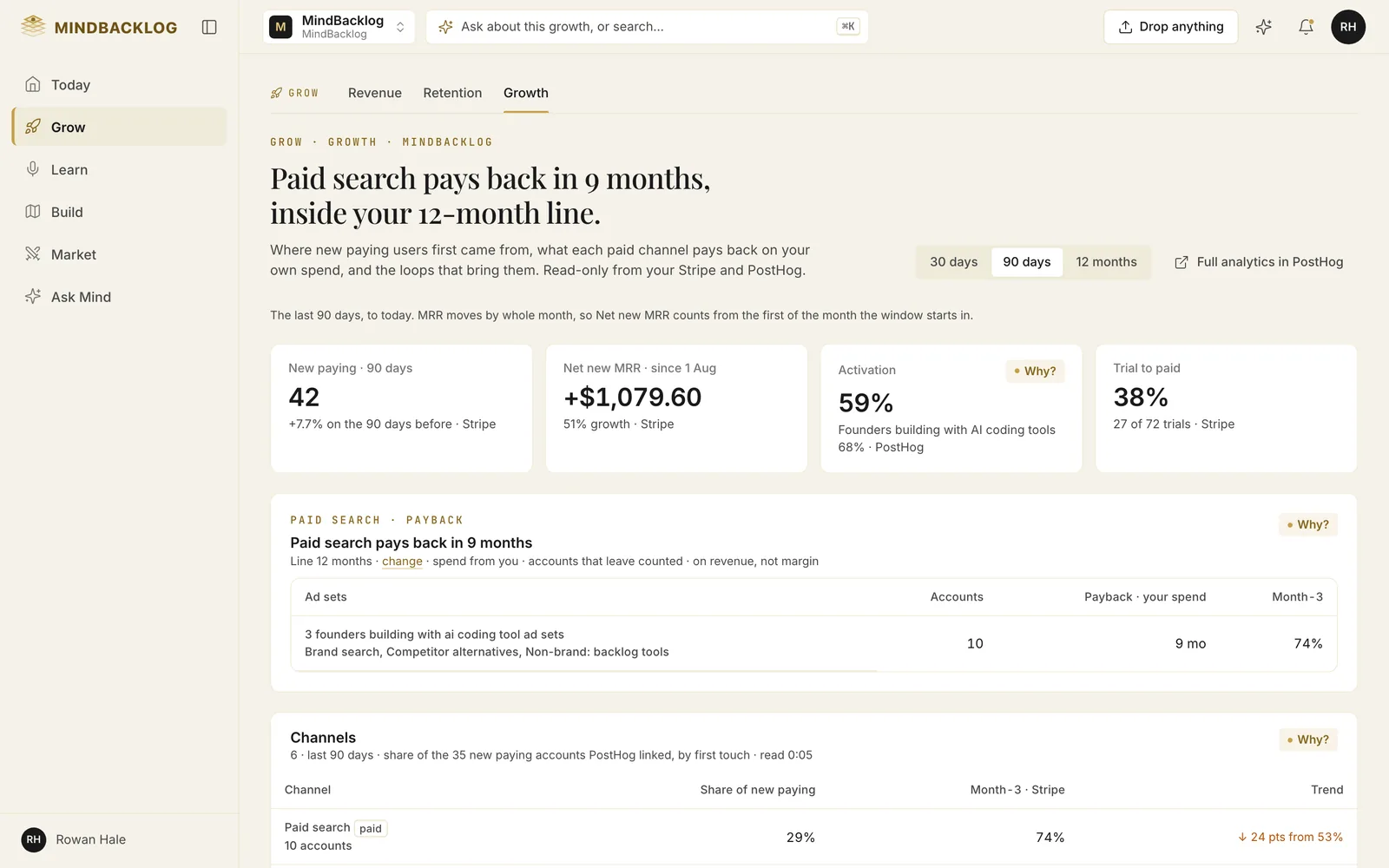
Which channel brings customers who stay.
See which channel brings customers who stay, and what your paid channels pay back on your own spend. Each new paying account is placed by its first touch in PostHog.
- Coverage is always shown. Accounts PostHog couldn't link are counted apart.
- Payback is on revenue and the spend you enter; no ad account is read.
- Under 10 accounts, a group says Not enough data.
Read-only, from your own tools
Every Stripe customer Grow reads is also a person in People. An initiative's prediction can be measured from Stripe or PostHog, and Results checks it on the date. Connect both in Settings › Connections.
Do I still need my Stripe dashboard?
Yes. Grow reads your own Stripe read-only and every page links to the full dashboard in Stripe. Grow adds what Stripe doesn't hold: segments, the health checks, and revenue at stake by problem.
Which Stripe permissions does it need?
A restricted key with Read on Customers, Subscriptions, Invoices, Products and Prices. Selling per use with no subscriptions, two read permissions are enough: Customers and Charges. A secret key is refused, and a missing permission is named in Stripe's words.
When does Grow appear?
Past product-market fit, or from 10 paying accounts. A product paid per use counts an account as paying when it paid in the last 12 months.
What does "Not enough data" mean?
The reading rests on too few answers or accounts to call. Under the first threshold it says Not enough data with its n; between the two it shows A direction. Small numbers are never called, and there is no single health score.
Can a viewer see my customers' names?
No. Grow shows viewers totals only. Account names on Revenue and Retention are fetched live from Stripe for owners and editors, and never stored. People keeps only the first name and last initial.
Find the segment the average hides.
Connect Stripe with a restricted key. Grow says when the numbers are too small to call.
- 14 days free
- No card needed
- Viewers are free
