
Problems ranked by the people who have them.
Every piece of feedback, sorted into problems ranked by who has them, with the quotes behind each. Your users rank first.
14 days free. No card needed.
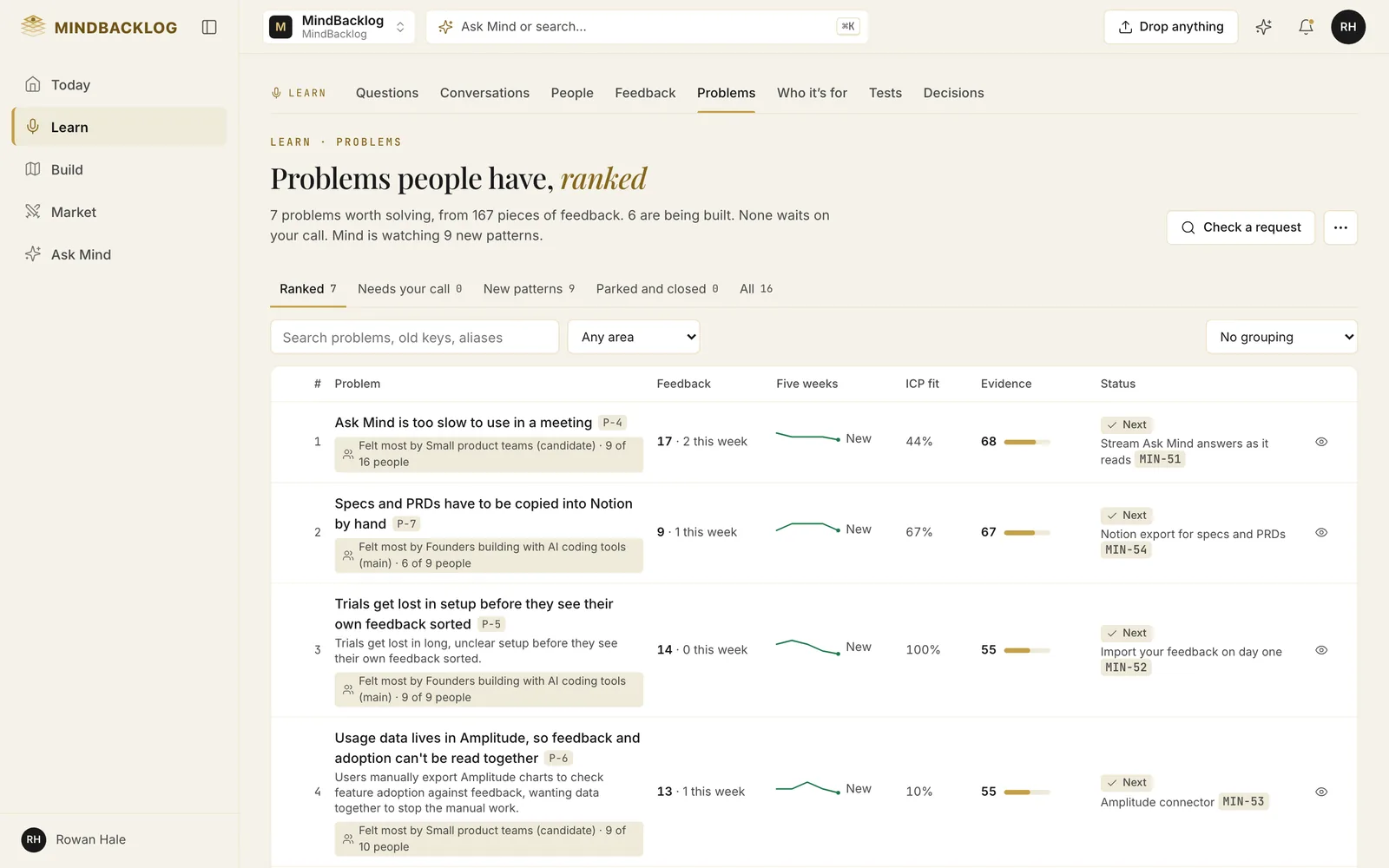
Customer feedback prioritization, counted from your users.
Every night Mind works out each problem's evidence strength. It weighs how many say it, how much comes from your main customers, who pays, and the two-week trend.
- A person counts once, however often they asked.
- Public threads and competitor reviews show as "Also in public", never counted.
- Under 30 pieces of feedback, Mind says "Not ranked" and why.
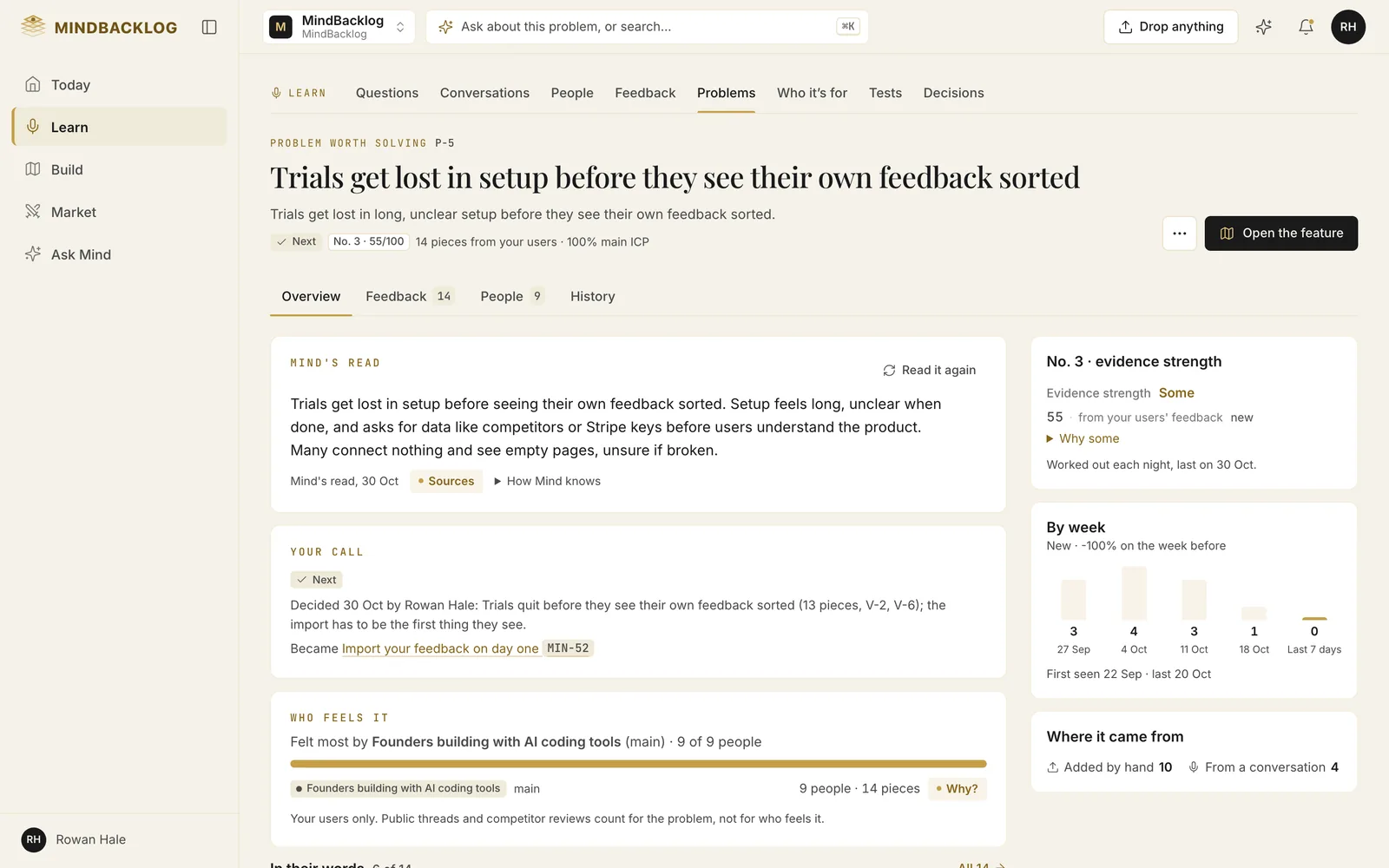
Who feels it, in their words. Then your call.
Who feels it lists the people behind a problem by segment, your main customers first, each with their own words. Public quotes are marked "Not your user".
Your call is Build, Test first, Not now or No, with a reason in one line. Build makes a feature with the problem's feedback as who asked. Every call can be undone for 24 hours.

Every number opens to what it's made of.
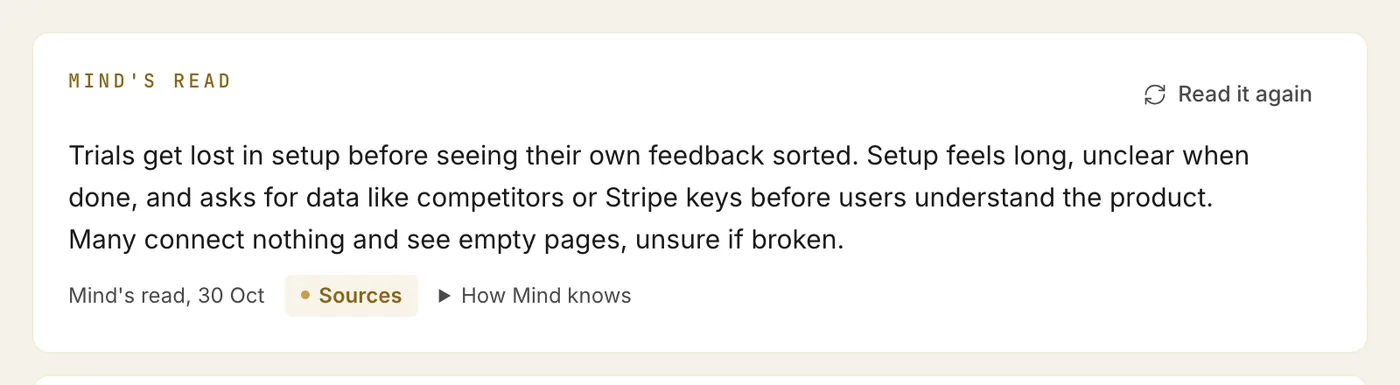
Wherever Mind shows a number or a read, How Mind knows opens the feedback it read and what it left out. The numbers are counts of your own data.
- Mind's read says what the feedback says, with its sources and date.
- Trend compares the last 30 days with the month before.
- With too little data it says Not enough, and how much there is.
Feature request prioritization: check before you say yes.
Test a request against what your users actually said, for and against. The verdict is counted from people, never written by the model.
Type the request as it was put to you
Mind searches only your kept feedback, by meaning and by its words.
Read the verdict
Strong, Some, Weak, No evidence either way, or Not enough feedback to check under 10 pieces.
Read the quotes, for and against
Each piece is quoted exactly, and a second look drops anything about something nearby.
Decide, with the record
Log Not now as a decision reviewed in 30 days, or draft a question for the people who said it.
What Mind sees, and what it never does
A problem you decide to build becomes a feature with its evidence attached, and from there a Build Pack your coding agent pulls. Feedback arrives through Feedback and Drop anything. For roadmap meetings with evidence, see the page for small product teams; if you build with Claude Code or Cursor, the page for builder founders.
Questions about Problems and Check a request
Something else? Search the help center or email us.
Why does a problem say "Not ranked"?
Under 30 pieces of feedback in the product, Mind says "Not ranked" and why, instead of inventing a ranking. The same goes for a problem with fewer than 3 pieces behind it.
Do Reddit posts and competitor reviews count?
No. Your users rank first. Public posts and competitor reviews are shown and marked "Not your user", but they never count toward a problem's rank or a request's verdict. Neither do your own team's notes.
Who writes the verdict in Check a request?
Nobody writes it. The verdict is counted from people, never written by the model. It reads Strong, Some, Weak, No evidence either way, or Not enough feedback to check under 10 pieces. Mind's take is one sentence with no numbers in it.
What does Check a request read?
Your collected feedback only, nothing from the web. Mind labels each piece as supporting or contradicting the request and quotes it exactly. A second look drops pieces about something nearby rather than the request itself.
Can I merge two problems that are really one?
Yes. Editors can merge a problem into another: its feedback moves, and both names stay findable. Mind also proposes new patterns from feedback filed under no problem; nothing becomes a problem until you say so.
Let your users rank the problems.
Drop in the feedback you have. Mind sorts it into problems, and says when there is too little to rank.
- 14 days free
- No card needed
- Viewers are free
