There is a pattern that kills more SaaS products than bad code, bad design, or bad marketing combined: building in isolation. The founder or product team spends months crafting features based on assumptions, launches to the world, and discovers that the market wanted something slightly — or dramatically — different. Design partner programs exist to prevent this. They are the most effective mechanism for validating a product with real users before committing to a public launch.
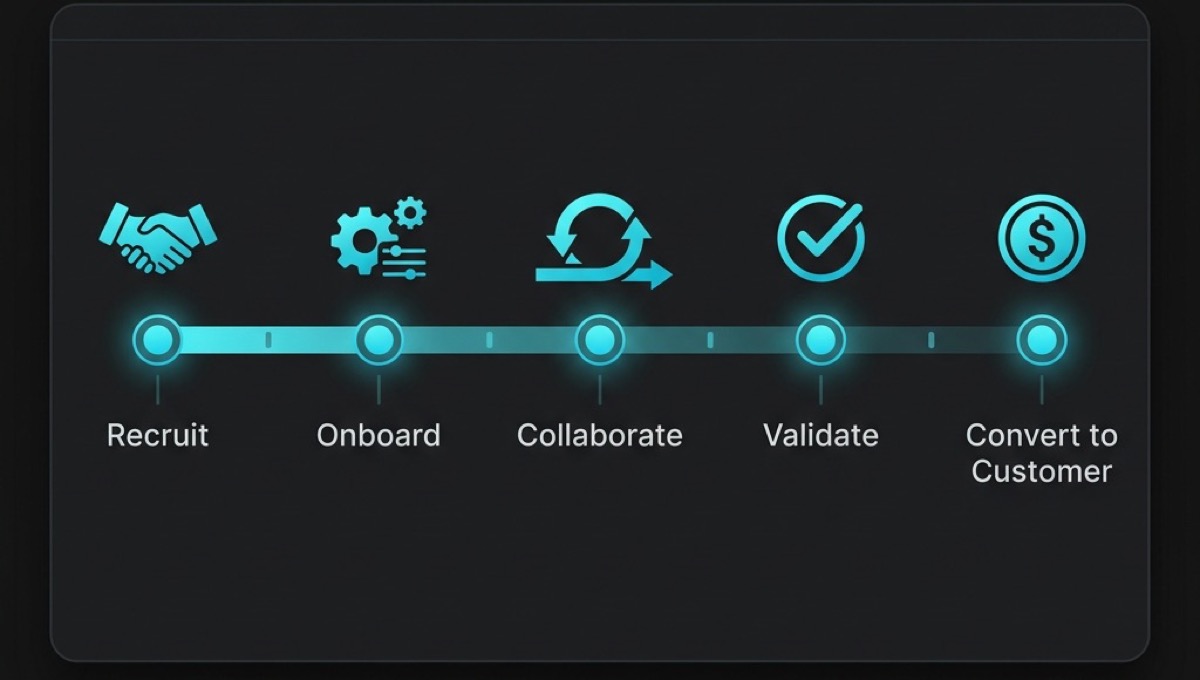
A design partner program is a structured collaboration between your product team and a small group of target customers who get early access to your product in exchange for active, ongoing feedback. It is not a beta test (which is typically passive), not a focus group (which is a snapshot), and not a free trial (which is self-service). It is a committed partnership where both sides invest time and attention to shape the product into something that genuinely solves real problems.
Why Design Partners Before Launch
The economics of design partnerships are compelling. Every feature you build based on an untested assumption carries risk. If the assumption is wrong, the development time is partially or fully wasted. Design partners compress the feedback loop from months to days. Instead of building a feature, launching it, and waiting weeks for adoption data, you share a prototype or early build with five partners, get feedback within 48 hours, and iterate before the feature reaches your broader user base.
Beyond validation, design partners provide three things that are difficult to obtain any other way. First, they give you language. Hearing how real users describe their problems, their workflows, and their expectations gives you the vocabulary for positioning, marketing copy, and documentation. Second, they give you confidence. When five independent customers tell you the same feature is essential, you can commit development resources with conviction. Third, they give you early revenue signals. Design partners who are willing to pay — even at a discounted rate — validate not just the product but the business model.
Recruiting the Right Partners
The quality of your design partner cohort matters more than the quantity. Five deeply engaged partners who represent your ideal customer profile will produce more value than twenty passive participants who signed up out of curiosity.
Start by defining your ideal partner profile. They should match your target customer persona — same industry, same team size, same pain points. They should have the problem your product solves and be actively looking for solutions, which means they are motivated to engage rather than doing you a favor. They should have the authority to eventually become paying customers, so avoid partners who can give feedback but cannot make purchasing decisions.
Recruitment channels include your existing network, relevant online communities (Reddit, LinkedIn groups, Slack communities), product-adjacent conferences, and direct outreach to companies you have identified as ideal customers. The pitch is straightforward: early access to a product that addresses their specific pain, direct influence over the roadmap, and preferential pricing when the product launches.
Aim for five to ten partners in your first cohort. Fewer than five gives you too small a sample to identify patterns. More than ten becomes difficult to manage with the high-touch engagement that makes design partnerships valuable.
Structuring the Engagement
A design partner engagement needs structure to produce useful outcomes. Without structure, it devolves into ad-hoc conversations that generate anecdotes but not actionable insight. The structure should include a defined timeline (typically three to six months for a pre-launch product), a feedback cadence (weekly or biweekly check-ins), clear expectations for both sides, and specific milestones.
Weekly check-ins should alternate between structured feedback sessions (where you walk through specific features and collect targeted input) and open-ended conversations (where the partner describes their workflow, their frustrations, and their evolving needs). The structured sessions tell you whether what you built works. The open-ended sessions tell you what you should build next.
Define what you expect from partners: regular usage of the product (not just occasional logins), honest feedback (including criticism), participation in scheduled calls, and willingness to provide testimonials or case studies if the engagement is successful. In return, partners receive early access, direct product influence, and a meaningful pricing discount.
The Feedback Collection System
Design partner feedback is some of the most valuable product intelligence you will ever receive. Treat it accordingly. Every conversation, every email, every Slack message should be captured, categorized, and fed into your product feedback system.
Use a dedicated feedback channel for each partner — this could be a shared Slack channel, a dedicated email address, or an in-product feedback widget. The key is that feedback has a clear destination and is processed systematically rather than lost in scattered conversations. If your product management platform supports multi-source feedback consolidation, design partner input should be one of those sources, weighted appropriately given the depth of engagement.
After each check-in call, the PM should document key insights, feature requests, pain points, and any changes to the partner’s workflow or priorities. This documentation becomes part of the evidence base that informs prioritization decisions.
Converting Partners to Customers
The ultimate measure of a successful design partner program is conversion to paying customers. Partners who have been actively engaged for months, who have shaped the product to fit their needs, and who have built workflows around it are the highest-probability conversion targets you will ever have.
Set the conversion expectation early. During recruitment, be transparent that the goal is a long-term commercial relationship. Offer a meaningful founding member discount — something that rewards their early investment while establishing a real revenue relationship. The discount should be permanent, not a temporary promotion, because it signals genuine appreciation for their partnership.
The transition from design partner to paying customer should be seamless. No data migration, no workflow disruption, no loss of features they have been using. The product they have been shaping is the product they are buying. This continuity is one of the strongest conversion drivers.
What Design Partners Teach You That Users Cannot
Regular users interact with your product on their terms — they use what works, ignore what does not, and rarely tell you why. Design partners engage on a fundamentally different level. They try features they would normally skip because they know you want feedback on them. They describe their reasoning, not just their behavior. They compare your product to alternatives they have used, giving you competitive intelligence you cannot get any other way.
This depth of insight is irreplaceable in the early stages of a product. It shapes not just what you build but how you think about your market, your positioning, and your long-term strategy. The five hours a week you invest in design partner management will be the highest-ROI time you spend during your pre-launch phase.
Ready to put your product intelligence on autopilot? Start your 14-day free trial at MindBacklog.com — no credit card required.