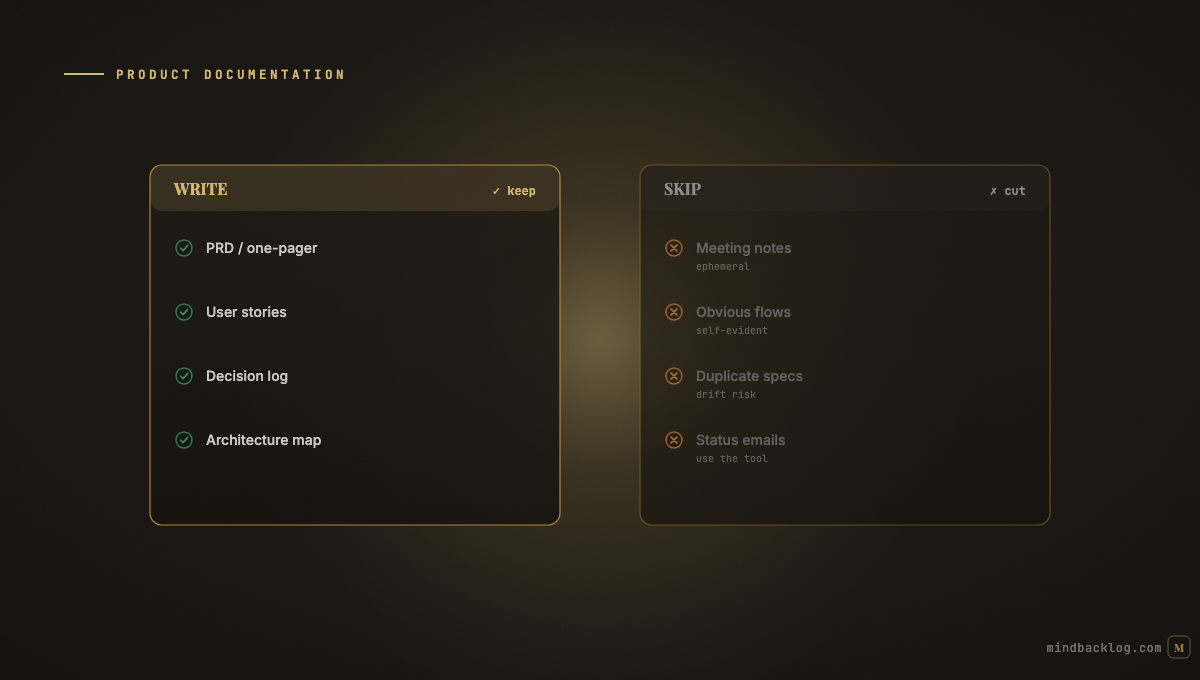
Product teams have a documentation problem, and it is not what you think. The problem is not too little documentation — it is the wrong documentation. Teams spend hours creating comprehensive specification documents that no one reads, detailed process guides that are outdated before they are published, and wiki pages that accumulate like sediment, burying the useful content under layers of stale information.
The goal of product documentation is not completeness. It is usefulness. A one-page decision log that the team references weekly is more valuable than a fifty-page product requirements bible that sits unread in a shared drive. The PM’s job is not to document everything but to identify which documents create genuine value and invest only in those.
The Five Documents Every Product Needs
Product Vision (one page, updated annually) defines where the product is heading and why. It aligns every team member on direction and serves as the tiebreaker for prioritization debates. This document earns its maintenance cost because it is referenced constantly.
Decision Log (running, updated per decision) records significant product decisions with their context, alternatives considered, and rationale. This is the single most underrated document in product management. When someone asks ‘why did we build it this way?’ six months later, the decision log provides the answer without requiring the PM to reconstruct their reasoning from memory.
Feature Specifications (per feature, AI-assisted) define what is being built and why. These should be lean — problem statement, key requirements, acceptance criteria, and open questions — not comprehensive tomes. AI-generated first drafts reduce creation cost by 60 to 70 percent, making it practical to maintain specifications for every feature.
User-Facing Help (per feature, maintained with releases) ensures customers can use what you build. Help documentation is a product surface — poorly documented features are effectively unshipped features. Invest in clear, concise help content for every customer-facing capability.
Competitive Overview (quarterly, updated with monitoring data) captures the competitive landscape in a format that sales, marketing, and product can reference. AI-powered competitive monitoring feeds this document with current data, reducing the quarterly update from a research project to a review task.
What to Skip
Process documentation that describes how the team works — sprint rituals, tool configurations, workflow steps — has a short shelf life and a narrow audience. Unless the process is genuinely complex or the team has frequent turnover, verbal knowledge transfer is more efficient than written documentation.
Exhaustive requirements documents that attempt to specify every edge case before development begins are counterproductive for most teams. They take days to write, are never fully read, and create a false sense of completeness that discourages the engineering-PM conversations that actually resolve ambiguities. Lean specs with active conversation are more effective.
Meeting notes that capture everything said in a meeting without distilling the key decisions and action items. AI meeting assistants can extract decisions and action items automatically — the raw transcript is archival, not operational.
AI-Assisted Documentation
AI reduces the cost of the documentation that matters while eliminating the need for documentation that does not. Feature specs are AI-generated from product context. Decision rationale is captured in the scoring and evidence trail of the prioritization system. Competitive overviews are populated from automated monitoring. Help content can be drafted from feature descriptions and acceptance criteria.
The PM’s role shifts from author to editor. They review and refine AI-generated documentation rather than creating it from scratch. This shift makes it practical to maintain living documentation — documents that are regenerated as new information arrives rather than decaying from the moment they are created.
| MindBacklog generates PRDs, feature descriptions, and evidence summaries automatically — reducing your documentation burden while keeping every feature’s context current and accessible. Document less. Know more. Start at mindbacklog.com. |
Ready to put your product intelligence on autopilot? Start your 14-day free trial at MindBacklog.com — no credit card required.


